
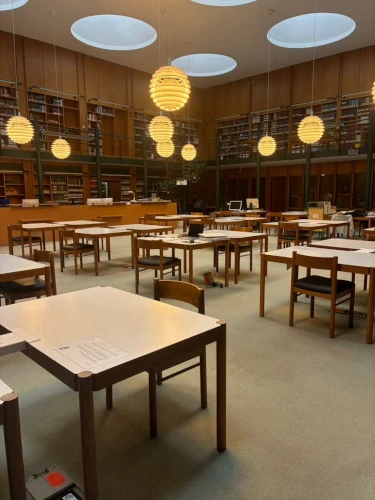
With the generous support of the Central European History Society, I conducted archival research in Germany during the summer of 2025 for my dissertation, Defending the Indefensible: Nazi Defense Attorneys in the Postwar Era. The project examines the lawyers who represented Nazi perpetrators after 1945 and analyzes how their legal strategies intersected with Cold War politics, historical revisionism, and the reintegration of perpetrators into postwar German society.
I spent approximately five weeks in Germany between July 8 and August 9, 2025, conducting research primarily in Munich, Augsburg, and Koblenz. My work focused on defense attorneys active in major postwar war crimes trials, including Hans Laternser, Alfred Seidl, and Robert Servatius.
In Munich, I worked extensively at the Institut für Zeitgeschichte, the Bayerisches Hauptstaatsarchiv, the Staatsarchiv München, and the Stadtarchiv München. There, I reviewed denazification files, professional records, correspondence, and trial-related materials documenting Alfred Seidl’s postwar legal career and his involvement in a range of high-profile war crimes proceedings.
I consulted defense materials from the Nuremberg Military Tribunals in Augsburg, where relevant holdings were accessible while the Nuremberg archives were unfortunately undergoing renovations. These files include pleadings, correspondence, and internal defense documents associated with multiple tribunal cases and provide insight into the organization and coordination of postwar defense advocacy.
In Koblenz, I conducted research at the Bundesarchiv on postwar trials and appellate proceedings involving Hans Laternser, as well as on broader governmental and legal debates surrounding war crimes prosecutions in the 1950s and 1960s. These materials place individual defense efforts within the wider legal and political landscape of the early Federal Republic.
This research trip substantially advanced my dissertation by supplying the core archival foundation for several chapters. Taken together, the materials will allow me to trace continuities in defense advocacy from the immediate postwar period through later decades and to analyze how legal argumentation functioned as a site of contestation over guilt, responsibility, and postwar justice. I am deeply grateful to the Central European History Society for its support, which made this research possible!