
The CEHS grant enabled me to pursue research that turned out to be pivotal for my dissertation. I am deeply grateful to the association for this opportunity, the value of which I did not even anticipate when I applied back in January.
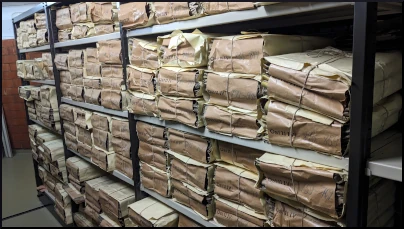
I spent a total of five weeks in Germany between June 15 and July 23, 2025. I began with a two-week research trip in the Bundesarchiv in Koblenz, which houses a large portion of the Radziwill family papers. This noble clan ranked among the wealthiest and most indebted in the Polish-Lithuanian Commonwealth. As such it plays a prominent role in my dissertation titled “Converting Empire: Imperial Russia and the Politics of Debt in the Territories of the former Polish-Lithuanian Commonwealth, 1793-1840s.” Research in this collection was especially rewarding because it offered a unique perspective on how debt shaped state–society relations in this region. The files contained information on the loans that the Radziwill family took from Russian, Prussian, Austrian, Italian and other banks and the attempts of the family representatives to achieve a favorable restructuring of their debts.
I subsequently conducted research for three weeks at the Geheimes Staatsarchiv Preußischer Kulturbesitz in Berlin, which offered a more heterogeneous collections of sources. I consulted a number of collections that contained papers on government deliberations over the property of indebted noblemen from the Polish-Lithuanian Commonwealth. The archives of several ministries and provincial authorities shed light on the triangular relationship between the Russian authorities, their Prussian counterparts, and the Polish-Lithuanian nobility from the 1790s onwards. Especially rich was the collection that included correspondence between Russian and Prussian authorities on the numerous property affairs that emerged after the arrival and subsequent departure of Napoleon’s armies.
The material I gathered will provide the backbone for two of my dissertation chapters. One chapter studies the complex interactions between Polish-Lithuanian noble families, the Russian imperial state, and domestic and international banks. The Radziwill case illustrates well the politics and culture of debt and hence the material from Koblenz has helped me craft a narrative that showcases the agency of the numerous historical actors implicated in the credit networks.
A second chapter focuses on private debt as a key component of the diplomatic processes that played out during and after the Second and Third Partitions of the Polish-Lithuanian Commonwealth. While my work focuses primarily on the activity of Russian diplomats, the material from the Geheimes Staatsarchiv, sheds light on the perspective and crucial intervention of the Prussian state as manager of the debts contracted by noble families in the Polish-Lithuanian Commonwealth.
Once again, I am deeply grateful for this opportunity!